Discover the studio
A visitor arrives through Google, social media, a recommendation or a direct link and immediately needs to understand the studio's style, quality and location.
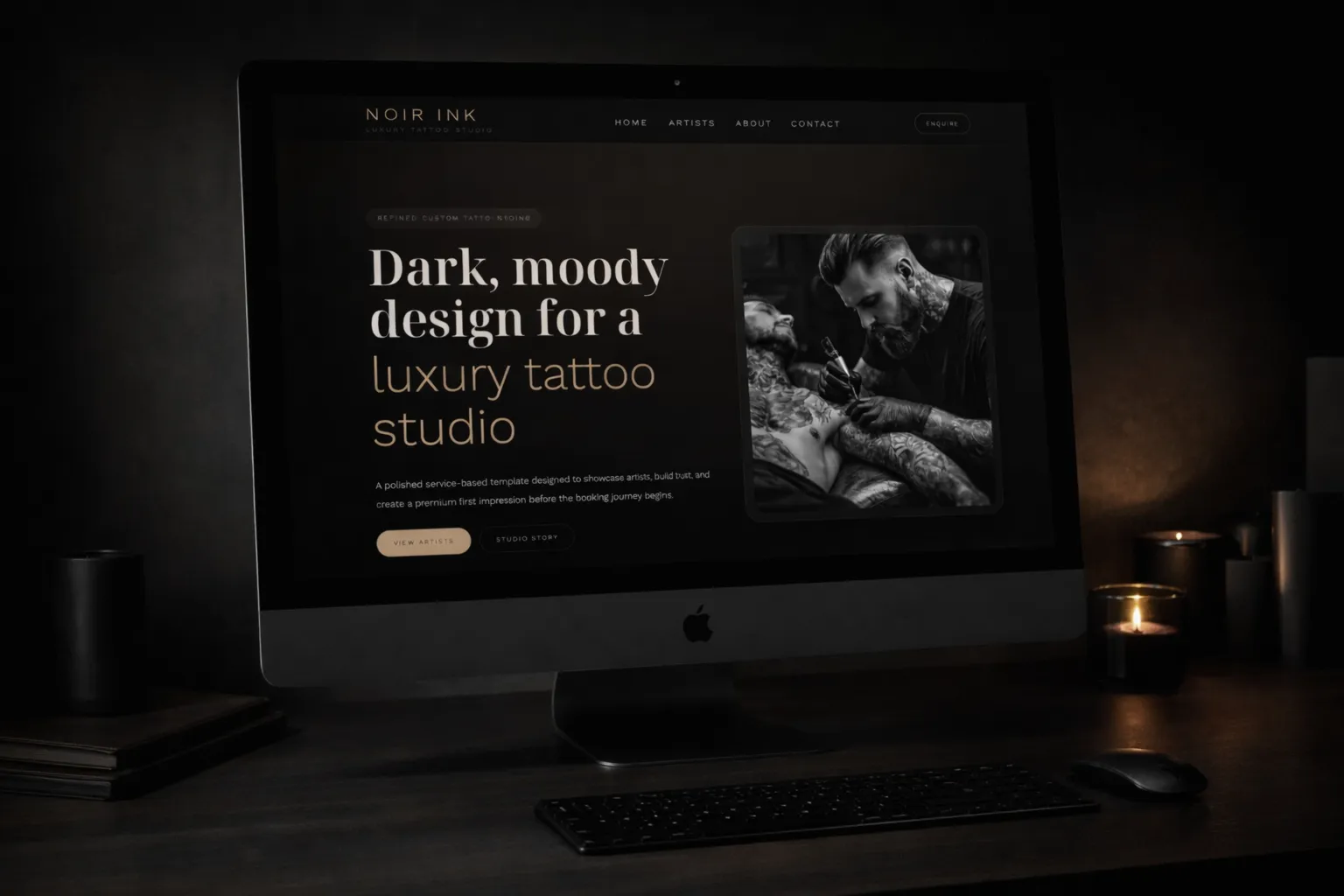
Your website should do more than display finished tattoos. It should help potential clients discover the right artist, understand your process, build confidence in your studio and take the next step without confusion.
Choosing a tattoo is personal. Before somebody sends an enquiry, they may compare artists, explore different styles, look for healed work, read reviews and check how consultations or deposits are handled. A strong website supports that entire decision. It removes uncertainty, makes the studio feel established and gives visitors one clear place to understand what happens next.
They are caused by missing information, difficult portfolios and unclear next steps. The website should guide a visitor from curiosity to confidence without making them search through months of posts or send a vague message just to learn the basics.
A visitor arrives through Google, social media, a recommendation or a direct link and immediately needs to understand the studio's style, quality and location.
Dedicated artist profiles help visitors match their idea with the right person instead of trying to identify artists from a mixed social feed.
Clear galleries let people examine relevant styles, larger images and suitable examples without losing their place or leaving the website.
Studio information, reviews, FAQs, policies and preparation guidance answer the questions that often delay an enquiry.
A structured form can collect the idea, placement, size, artist preference, availability and reference images in one useful enquiry.
The studio can review suitability, reply clearly and request a secure deposit at the right point in its own process.
Potential clients often discover studios while browsing on their phones. The mobile experience therefore needs to make artist discovery, portfolio browsing and contacting the studio feel natural from the first screen.
This live example demonstrates one possible direction. A finished website would be shaped around your own brand, artists, photography, services and enquiry process rather than simply duplicating the demo.
The right structure depends on the studio, but these are the foundations that usually make the website easier to trust, browse and use.
Give each artist room to explain their background, preferred styles and approach, supported by a focused portfolio and direct consultation route.
Present strong work by artist or style so visitors can quickly find relevant examples instead of scrolling through an undifferentiated gallery.
Make location, accessibility, age requirements, opening information, deposits and cancellation guidance easy to find.
Collect enough information to understand the request without making the form so long that suitable clients abandon it.
Use real photography, artist information, reviews, FAQs and transparent processes to reduce uncertainty before a client gets in touch.
Large images need careful sizing and delivery so the portfolio still feels premium without becoming frustratingly slow on mobile connections.
A studio website should reflect that behaviour. A mixed gallery may show that the team produces excellent work, but individual artist pages help a potential client understand who specialises in the style they want and who feels like the right fit.
Profiles can combine a short biography, preferred styles, portfolio work, availability guidance and a consultation button. That makes the decision easier for the visitor and gives the studio more organised enquiries.
It also creates meaningful pages around artists and specialisms instead of asking one general studio page to explain everything.
A portfolio should feel curated. The goal is not to publish every image available, but to help the right client recognise the quality and style they are looking for.
Give strong work enough visual space while optimising files carefully for mobile speed and clarity.
Organise relevant work around realism, fine line, traditional, blackwork, colour, ornamental or other genuine specialisms.
Make it obvious who created each piece and provide a natural route from the image to that artist's profile.
Include suitable healed examples when the studio has permission and imagery that accurately represents the finished result.
Use useful alternative text and captions where they add context rather than relying on images alone.
Selected galleries can be managed through the Black Pastel client area, depending on the website plan.
A consultation form should collect the information your team actually needs: the idea, placement, approximate size, preferred style or artist, availability and reference images.
This does not replace the artist's judgement. It gives the studio a clearer starting point, reduces vague one-line messages and helps the enquiry reach the right person.
Discuss Your WorkflowCustom tattoo work does not always suit an instant appointment calendar. Some studios begin with an enquiry, others offer consultation slots, and some take deposits only after an artist has reviewed the request. The website should follow the real process.
Suitable for studios that need to review the idea before confirming an artist, appointment or price.
Where appropriate, selected consultation times can be offered without exposing the whole tattoo appointment diary.
Deposit payments can be requested at the right stage, using a secure payment flow rather than collecting card details manually.
Read more about how online payments work.
More complex studios may benefit from artist routing, enquiry management, payment links or private admin tools.
Explore our service booking systems.
Social media remains useful, but it should support the website rather than carry every part of the customer journey alone.
Older portfolio work, policies and important studio information can become difficult to find inside a busy feed.
Artist profiles, galleries, FAQs and consultation routes remain available in a structure controlled by the studio.
A dedicated website gives search engines stable pages about the studio's location, artists and genuine specialisms.
Social media can introduce the work, while the website gives interested visitors the depth and reassurance needed to enquire.
This checklist is a useful way to review whether the site supports visitors beyond simply showing images.
These issues are common because they are easy to overlook when the studio already knows its own artists and processes.
A visitor may struggle to find a particular style, artist or policy among months of mixed posts.
Strong work loses context when visitors cannot tell who created it or how to contact that artist.
Visitors should not have to guess whether to call, message, request a consultation or pay a deposit.
Unoptimised photographs can make an otherwise beautiful site painfully slow on mobile devices.
Missing deposit, cancellation or age guidance creates avoidable questions and uncertainty.
Repeated place names and generic marketing copy are less useful than genuine information about the studio and artists.
Good local SEO starts with accurate, useful information. The website should clearly explain where the studio is based, how to visit and what each artist genuinely specialises in.
The studio name, address, contact details, opening information and directions should be accurate across the website and Google Business Profile.
Individual profiles create relevant content around artists and their actual specialisms without forcing every keyword onto the homepage.
Pages or portfolio sections can explain genuine areas of work such as blackwork, realism, fine line or traditional tattooing where appropriate.
A strong website works alongside genuine reviews, studio photography and a well-maintained Google Business Profile.
See our wider website design service.
No genuine designer can guarantee a particular Google position. We can build strong technical and content foundations, make the business easier for search engines to understand and support sensible ongoing improvements.
The process is designed to organise the material you already have and identify what is still needed before the website is built.
We review the artists, branding, services, policies, customer journey and goals for the website.
We organise artist pages, galleries, studio information, forms and calls to action around how clients make decisions.
The website is created responsively, populated with the agreed content and refined around your feedback.
Hosting, maintenance and technical support continue through the chosen Black Pastel plan.
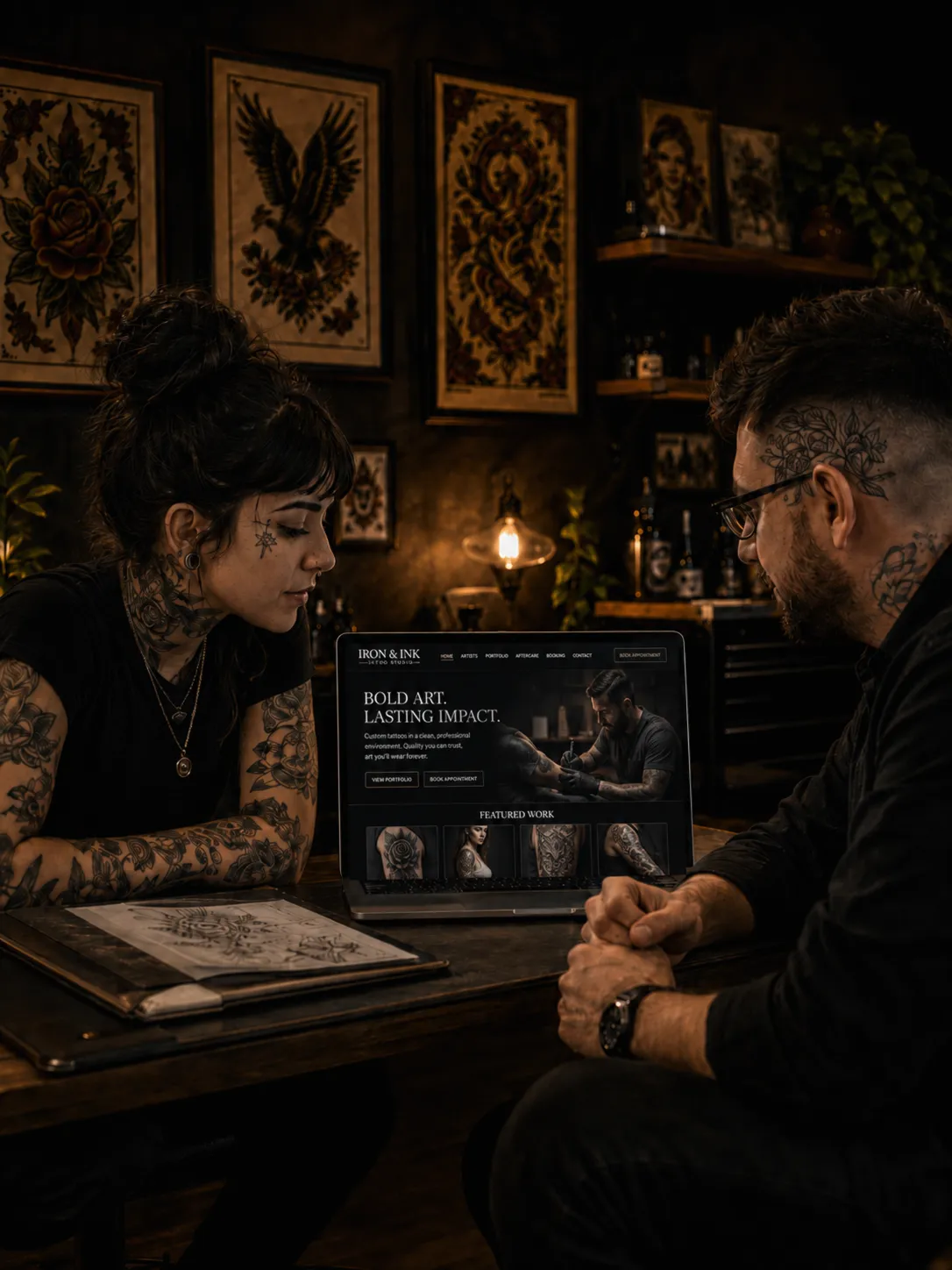
Start with a professionally designed, mobile-friendly website and ongoing support. Artist pages, editable galleries, consultation forms, ecommerce and more advanced booking functionality can be included or added according to the plan and the studio's actual needs.
Practical answers covering portfolios, consultations, deposits, ecommerce, SEO, mobile design and ongoing support.
Black Pastel managed website plans start from £35 per month. The final price depends on the chosen plan, number of artist pages and whether the studio needs editable galleries, image uploads, consultation forms, ecommerce, deposits or a tailored booking workflow.
Yes. Each artist can have a dedicated page with a biography, preferred styles, portfolio galleries, availability guidance and a clear route to request a consultation.
Yes. A consultation form can collect the idea, placement, approximate size, preferred artist, availability and reference images before the studio replies.
Yes. Secure Stripe payments can be added where they fit the studio's process. Deposits can follow consultation or approval rather than being taken before the studio has reviewed the request.
That depends on how the studio works. Some studios suit direct booking for consultations or selected services, while custom tattoo appointments often benefit from an enquiry and approval stage first.
Selected galleries, artist details and other content can be managed through the Black Pastel client area, depending on the chosen website route and plan.
Yes. The layouts are designed responsively so visitors can compare artists, browse portfolios, read policies and submit enquiries comfortably on phones, tablets and desktop screens.
The website can provide strong foundations through clear location information, artist pages, style-led content, page titles, internal links and technical SEO. Rankings also depend on competition, reviews, reputation and ongoing activity.
Usually, yes. Instagram is useful for sharing recent work and building an audience, while the website gives the studio a permanent, organised home for artists, portfolios, policies, enquiries and search visibility.
An Instagram link or suitable feed can be discussed, but important portfolios and studio information should also live directly on the website so they remain organised, searchable and under the studio's control.
Yes. Galleries can be organised to show the work that best represents each artist, including healed pieces where the studio has suitable images and permission to publish them.
Yes. Consultation forms can allow visitors to choose a particular artist or ask the studio to recommend the best fit for their idea.
Yes. Ecommerce can be discussed for gift vouchers, merchandise, aftercare products and other suitable studio items.
Yes. Selected customer reviews can be displayed as trust signals, while the website can also link visitors to the studio's Google Business Profile or other appropriate review platform.
Yes. Black Pastel can review an existing website and rebuild or refresh it around clearer navigation, stronger portfolios, improved mobile usability and a more useful consultation journey.
The website can collect appropriate pre-appointment information and provide preparation guidance. Requirements involving sensitive personal or health information should be reviewed carefully before deciding what should be collected online.
Timescales depend on the number of artists, the quality and readiness of the content, the required forms and any custom functionality. A clear scope and organised photography usually make the process smoother.
No. The demo shows one possible visual direction. The finished website would be adapted around the studio's own identity, artists, photography, content, colours and customer journey.
Whether you are opening a private studio, adding new artists or replacing a website that no longer reflects the quality of your work, Black Pastel can help you plan a clearer portfolio, consultation and enquiry experience.